
Why Shouldn’t You Sleep with Makeup On?
It can cause acne: Makeup mixes with oil and dirt, clogs the pores, and may lead to breakouts.
It makes the skin look dull: Makeup left on overnight can reduce the skin’s natural freshness and glow.
It may speed up skin ageing: Makeup and pollution can damage the skin barrier and contribute to fine lines and wrinkles.
It reduces the effectiveness of skincare products: Night creams and serums should always be applied to clean skin.
It can worsen existing acne: Sleeping with makeup is especially harmful to oily and acne-prone skin.
It increases the risk of irritation and infection: If your skin is already damaged or inflamed, leftover makeup may make the condition worse.
It can cause redness and sensitivity: Fragrances and colouring ingredients in some makeup products may irritate sensitive skin.
It interferes with the skin’s repair process: Your skin repairs itself while you sleep, and leftover makeup can disturb this process.
It can make the skin dry and uneven: Sleeping with makeup may cause dryness, flaking, and rough skin.
It can make your lips dry and cracked: Sleeping with lipstick on may reduce moisture and cause cracked lips.
It can irritate the eyes: Mascara, eyeliner, and eyeshadow may cause redness, swelling, burning, and sensitivity.
A Simple Way to Remove Makeup
Wash your hands before touching your face.
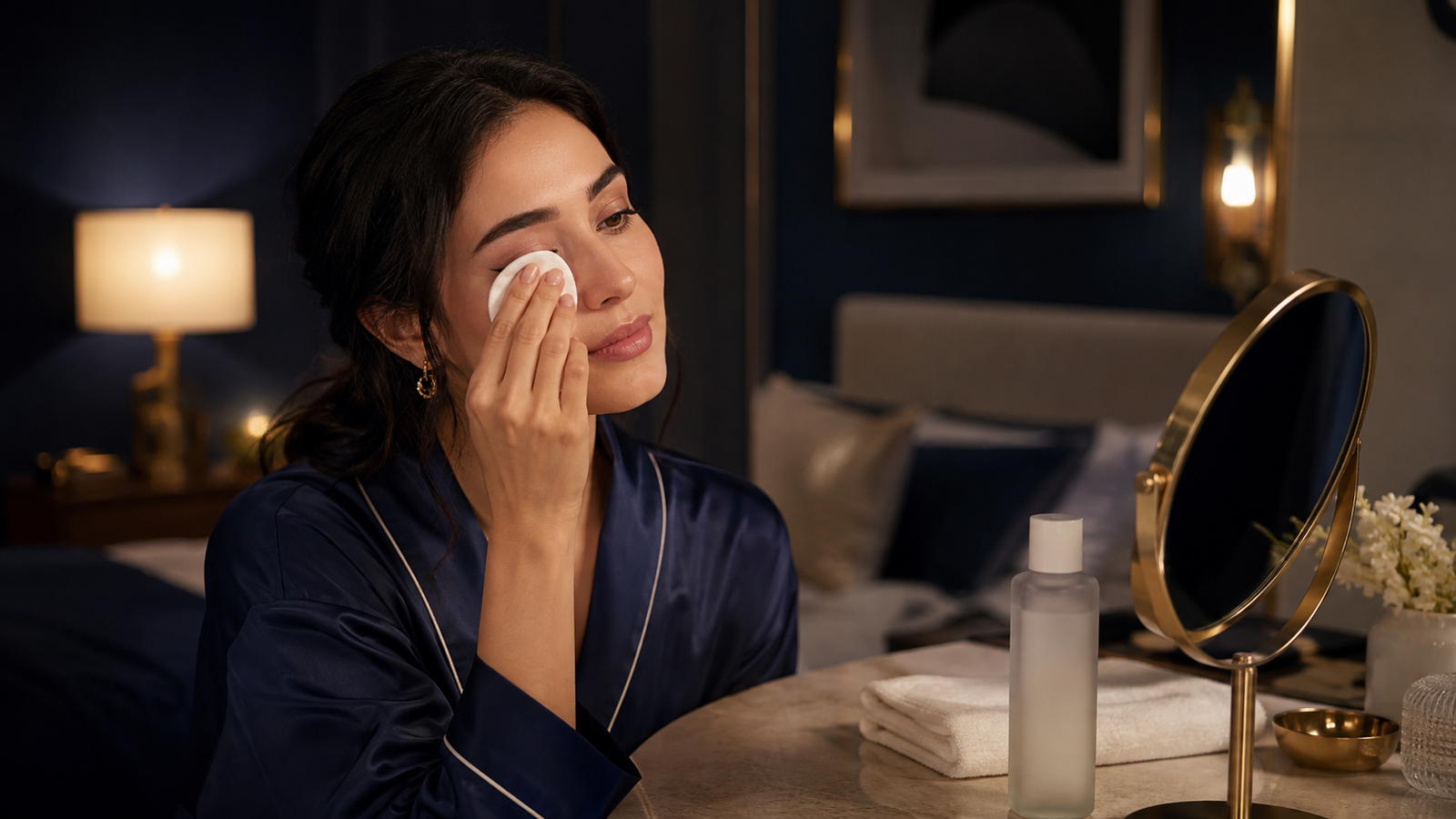
Remove your makeup with micellar water or a suitable makeup remover.
Wash your face with a cleanser suitable for your skin type.
Gently dry your skin with a soft, clean towel.
Finish by applying a moisturiser.
To remove eye makeup, place a cotton pad soaked with makeup remover over your closed eye for a few seconds. Then gently wipe it away without rubbing or applying pressure.
Common Makeup-Removal Mistakes
Using only face wash to remove heavy makeup
Rubbing the skin and eye area too hard
Forgetting to clean the corners of the eyes and lash line
Regularly using makeup wipes instead of properly cleansing the face
Skipping moisturiser after cleansing
Which Makeup Remover Is Best for Your Skin?
Dry or dehydrated skin: Cleansing milk or a cream cleanser
Heavy or waterproof makeup: Oil-based makeup remover
Oily skin: A lightweight, oil-free cleansing gel
All skin types: Micellar water suitable for your skin
When you are in a hurry: Makeup-removing wipes—but it is still better to wash your face afterwards
Conclusion
Removing your makeup before bed takes only a few minutes, but it can help prevent acne, dryness, irritation, and premature ageing. For healthy and glowing skin, always remove your makeup and daily impurities before applying your nighttime skincare products.

0 comments
Questions, useful perspectives, and thoughtful replies are welcome.
Be the first to join the conversation.